





 +86 18310268158

CNC Press Brake: How Bending Works and What It Costs
A cnc press brake bends sheet metal along a defined line. It holds the sheet between two tools and presses one into the other. No cutting, no material loss — only a controlled shape. Our factory in Nanpi, Hebei, has bent sheet metal since 1999. Stamping runs on our 40+ presses; bending runs on CNC press brakes. This guide explains the machine, the specs and the cost drivers. Every point is one our engineers use daily. For the bending line in context, see our metal bending service.
How the Machine Works
The punch presses the sheet into the die. The back gauge positions the sheet before every bend. A controller stores the program: X position, radius, angle, force. One operator runs the full batch, bend after bend, to the same angle.
- Air bending: shapes at a set angle with lower force. The punch depth sets the result.
- Bottom bending: forms the part fully against the die. It holds angle better but needs more tonnage.
- Tooling: punch and die shape the inside radius. A change of radius is a change of tool.
The cnc press brake is the most forgiving high-volume bending method we run. It is also the most measurable. Every bend leaves a number in the program. That number is what your tolerance is checked against.
Machine Specs That Decide Your Part
- Tonnage per meter: sets the thickness and bend length you can form.
- Table length: sets the longest bend line in one setup.
- Tool gap and punch shape: set the minimum inside radius.
- Back-gauge axes: set positioning accuracy across repeated bends.
Ask the factory for the spec sheet of the machine your part runs on. One page settles most capability questions. Longer parts may need two setups, and the seam shows. Say the table length in the quote, or the part may bend in two places. Material choice moves these numbers too. Our guide on how metal fabrication selects materials covers the steel side of the decision.
Bend Radius and Material
Inside radius follows the material. For steel, our default suggestion is a radius at or above the sheet thickness. Below that, the outer fiber stretches past its limit. The metal cracks at the bend line. Thicker sheet needs more force for the same angle. Stainless needs more than mild steel, at the same thickness. Aluminum needs less force, but scratches easily under the tool. State the material and the radius in the drawing. We check both before we quote, and we flag the conflict in writing.
Springback: The Number the Machine Compensates
The sheet wants to open back after the punch leaves. That opening is springback, and it is the silent killer of bend angles. The machine bends past the target angle to cancel it. The over-bend is stored per material, thickness and tool. Our controls hold it per job, updated from measurement. The bend angle tolerance then follows your drawing, not the machine’s habit. A part that bends true on Monday still bends true on Friday. Our defaults and the tighter classes we hold are listed in sheet metal tolerance standards.
What Moves the Bending Cost
- Number of bend lines on the part.
- Setup: tooling, back-gauge program, first-piece check.
- Material grade and thickness per bend.
- Volume: setup cost divides by the batch size.
- Angle and radius complexity.
Two parts can cost three times apart with the same material. The gap is usually setup count, not bend count. A part with five short bends and one setup beats a part with two long bends and three setups. Bending is one step of our full production chain. For when the process should be stamped or machined instead, read metal stamping vs CNC machining.
When Stamping Replaces Bending
At volume, formed stampings beat bent sheet on cost and repeat. A progressive die forms the flange in one hit. Bending needs a setup per line, per batch. The switch point depends on your annual volume and part geometry. Most buyers stamp above a few thousand units a year. Below that, laser plus bend stays cheaper and shorter. The tonnage math behind both routes is in our stamping capacity guide. We will tell you which side of the line your part sits on, before you commit.
Quality Checks on Bent Parts
- Bend angle against the drawing, on every batch.
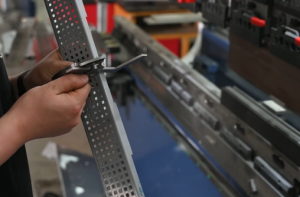
- Flange height and edge distance at the marked datums.
- Straightness along the full bend line.
- Surface: no marks from tool or die.
- Records: the measured values, not an “OK” note.
The check list is short because the failures are short: angle drift, springback error, surface marking. Each one is caught at the first piece, before the batch runs. That is the difference between a cnc press brake that bends and one that is watched. The full inspection flow is on our quality inspection page.
Our Bending Setup
Blanks come off our 6kW laser. They bend on CNC press brakes. Assemblies weld in-house and finish in our surface treatment line. One roof means the bend line owns its inputs. The part walks from laser to brake to weld, on our floor. That is the shortest path from flat sheet to finished part, and it is the path your part takes.
Frequently Asked Questions
What is a CNC press brake?
A machine that bends sheet metal between a punch and a die. A back gauge positions the sheet; a controller stores every bend program. It is the workhorse of sheet bending at volume.
How is bending tonnage decided?
It follows material, thickness, bend length and radius. Thicker or harder sheet needs more force. We confirm the machine in the quote.
What is springback, and how is it controlled?
Springback is the sheet opening after the bend. We over-bend a measured amount per material and thickness. The target angle comes off the line.
What sheet thicknesses can be bent?
It depends on the machine and the tool set in use. Our line bends from thin gauge to several millimeters. Send the part and we name the machine.
How much does press brake bending cost?
Setup plus a per-bend charge, divided by volume. A one-line part costs mostly setup. A ten-line part costs mostly bends. The quote splits both lines.
Get a Bending Quote
Send your part — we reply with a bend plan and price.
WhatsApp: +86 183 1026 8158 | Email: alina@xinjiuxinji.com
Or request a quote online.


