





 +86 18310268158

Metal Stamping vs CNC Machining: When Each Process Wins
Stamping and CNC machining both make metal parts. They answer different questions about volume, geometry and cost. Choose wrong and you pay twice. This guide compares both processes and gives a clear decision rule.
Xinjiuxinji Hardware runs both processes in one factory. We have produced custom metal parts in Nanpi, Hebei since 1999. This article reflects daily process selection, not theory. The matrix below compares metal stamping vs CNC machining across nine factors.
Process Comparison Matrix
| Factor | Metal Stamping | CNC Machining |
|---|---|---|
| Principle | Dies shape sheet metal under pressure | Cutting tools remove material |
| Best volume | High volume | Low to medium volume |
| Unit cost at volume | Very low | Moderate to high |
| Tooling cost | High (dies) | Low (programs and fixtures) |
| Tooling lead time | Weeks | Days |
| Geometry | Flat and formed sheet parts | Complex 3D shapes |
| Material form | Sheet, coil | Bar, plate, billet |
| Typical tolerance | ±0.10 mm (typical) | ±0.05 mm (typical) |
| Surface finish | Good, process-dependent | High, cutter-dependent |
| Material waste | Low | Higher |
| Part strength | Grain flow follows shape | Cut structure, uniform |
Typical tolerance values depend on material, size and design. Confirm values with your supplier before tooling.
Where Metal Stamping Wins
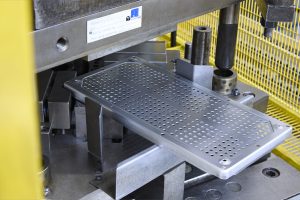 Stamping wins when volume is high and shape suits a die.
- Brackets, clips and mounting plates.
- Enclosures and box body shells.
- Deep drawn cups and housings.
- High-volume hardware and appliance parts.
The die cost spreads across thousands of parts. Unit cost drops fast. Material waste stays low because sheet metal is cut efficiently.
In our factory, 40 stamping presses from 80 to 400 tons run this process daily. Stamping produces consistent parts at high speed. Quality comes from the die and the process control.
Where CNC Machining Wins
Machining wins when geometry is complex and volume is low.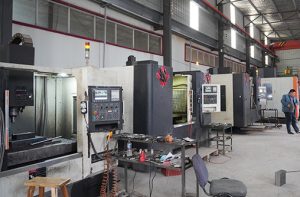
- Prototypes and one-off parts.
- Complex 3D features and deep pockets.
- Tight tolerance features on machined faces.
- Parts that start as bar or billet material.
No die means fast start. Engineering changes cost little. Small quantities stay economical because setup replaces tooling.
Our factory runs five CNC machines, including two five-axis centers. We machine stamped parts where tighter features are required.
When to Combine Both Processes
Many real parts need both. A stamped body gets machined bosses. A cast housing gets machined faces. A drawn shell gets drilled holes.
Combining processes in one factory removes hand-off risk. Tolerances transfer cleanly between steps. Delivery risk drops without multiple vendors.
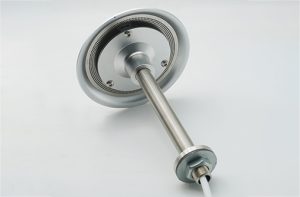
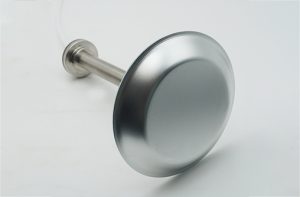
Since 1999, we have customized more than 70,000 types of metal parts. Most complex projects combine stamping, deep drawing, cutting, welding and CNC machining in-house.
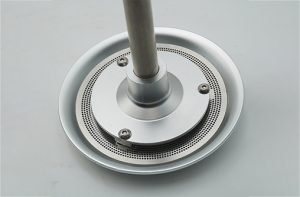
Below is a component that we recently produced using a combined process.
Common Mistakes in Process Selection
The biggest error is treating metal stamping vs CNC machining as interchangeable. They answer different questions.
- Choosing stamping for a complex 3D prototype.
- Choosing CNC for a million-piece simple bracket.
- Comparing unit price without adding tooling cost.
- Ignoring material form and grain direction.
- Designing for one process when both are available.
Send drawings early. Engineers can flag the better process before tooling starts.
Decision Rule
Use this simple logic:
- High volume, sheet-based part → stamping.
- Low volume, complex 3D part → CNC machining.
- Prototype first, mass production later → machine the prototype, stamp the volume part.
- Uncertain → ask both quotes and compare total cost.
Our engineering team includes 19 engineers. They review manufacturability and cost before every quote. The factory is certified to ISO 9001:2015 and employs 120+ people.
FAQ
Q: Is stamping cheaper than CNC machining? A: At high volume, yes. The die cost spreads over many parts. At low volume, machining is usually cheaper because tooling costs less.
Q: Can stamping achieve the same tolerance as CNC? A: Not always. Stamping holds typical tolerances around ±0.10 mm depending on material. Machining reaches tighter values on machined features.
Q: When should I prototype with CNC and produce with stamping? A: When volume will grow. Machine the prototype for fast iteration. Switch to stamping once the design and volume are confirmed.
Q: Can both processes apply to one part? A: Yes. Many parts are stamped first and machined where tighter features are needed.
Start Your Project Today
Your process choice determines half your cost. Send drawings today and get a free quote for custom metal parts within 8 hours. Our engineers will recommend the right process.


