


 +86 18310268158

Sheet Metal Fabrication Services: Why 3 Industries Choose Us
When choosing Sheet Metal Fabrication Services, have you ever experienced any of these moments:
- The drawings have been sent out for a week, but the supplier hasn’t even provided the process plan.
- The sample mock-up has been reworked three times, but it still can’t be installed.
- The delivery date keeps being postponed, forcing your production line to stop and wait for materials.
- Upon receiving the goods, we found deviations in the hole positions and bending angles, rendering assembly impossible.
If you can relate to these scenarios, then this article is precisely what you’ve been waiting for. Today, we will present three real industry collaboration cases to show you why customers ultimately choose our Sheet Metal Fabrication Services.
Medical Equipment
When ±0.1mm of precision meets small batch production
The shell and hole positions of medical equipment such as monitors, ultrasound diagnostic devices, and dialysis equipment. Even a deviation of more than 0.1mm in these positions can cause assembly problems for the internal components.
Moreover, most medical equipment is in R&D or small-batch trial production, with typical order volumes of dozens to hundreds of sets. Large manufacturers decline such small orders, while small ones cannot guarantee precision.
Project background
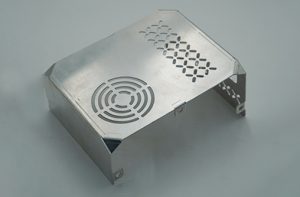
An ultrasound diagnostic equipment company once encountered such a problem. Their casing needed to ensure that the size tolerances for length, width, and height were within ±0.1mm to guarantee the precise assembly of internal components such as the ultrasound probe and circuit board.
-
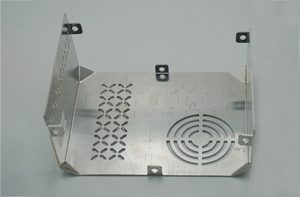
- heat-dissipation-base
-
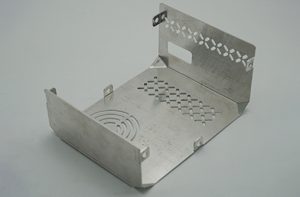
- heat-dissipation-base
-
- heat-dissipation-base
The previous supplier’s delivery time kept being delayed, and the samples had to be reworked twice, but still failed to meet the standards.
Our solution
Upon receiving the requirements, our engineering team immediately reviewed the drawings, rebuilt the shell’s 3D model and marked key dimensions such as hole spacing and bend angles, preventing drawing interpretation misunderstandings from the outset.
For the 1–3mm thin sheets commonly used for medical shells, engineers proposed replacing the original mold-dependent stamping process with a combined laser cutting and bending solution, enabling rapid validation without mold fabrication.
Production process
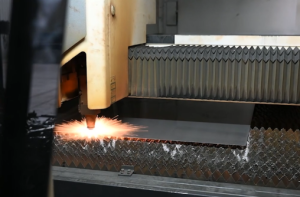
We use 6-kilowatt laser-cutting equipment for precise cutting. We adopt the “low power + high speed” mode to prevent material deformation caused by high temperatures, and the cutting edges have no burrs. No secondary grinding is required.
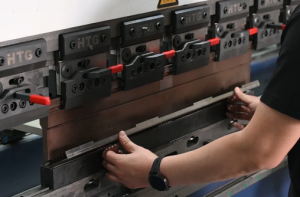
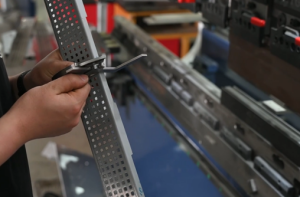
A CNC bending machine performs the bending process, and the “automatic spot welding machine” ensures a seamless connection. After cutting, the coordinate measuring machine conducts sampling inspections on each hole position and diagonal dimensions.
We utilize a dedicated sample production line, and the samples are delivered from order placement to completion in just 72 hours.
Result
The samples passed the customer’s quality inspection in one go, and the packaging qualification rate increased from 85% at the previous supplier to **100%**. Subsequently, the customer also handed over the mass production orders to us.
Automotive Components Industry
When 20,000 pieces of stamping meet dimensional consistency
The requirements for metal components in the automotive parts industry can be summarized in three words: large quantity, high consistency, and tight delivery time.
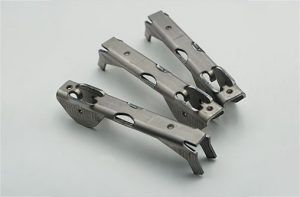
An automotive parts supplier once got into a lot of trouble due to an order for a stainless steel mounting bracket. The order quantity was 20,000 pieces, and the material was high-strength cold-rolled steel. It was required to maintain a high degree of dimensional consistency during mass production.
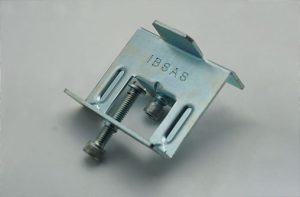
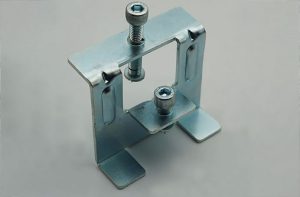
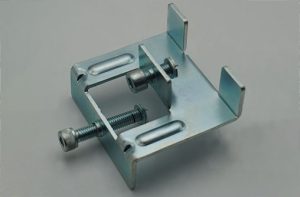
The previous supplier experienced significant dimensional drift after just 1,000 pieces were produced, and quality control completely collapsed, resulting in the scrapping of the entire batch.
Our solution
After receiving the requirements, our business team first clarified all the technical requirements with the client. Subsequently, the engineering team conducted a manufacturability review of the drawings and confirmed the material selection and process route.
At the production end, our Stamping Press ensures continuous production capacity for large-scale orders. Before each production batch, the spectrometer and hardness tester conduct incoming material inspections to prevent the use of inferior materials.
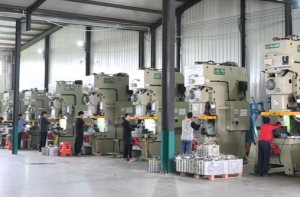
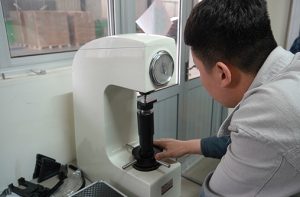
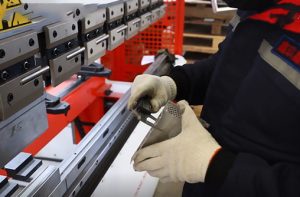
Quality control is the most critical aspect in the automotive industry and cannot be compromised. We adopt online sampling inspections combined with full-batch inspections and record key dimension data in real time.
A consistency recheck is conducted for every 500 pieces to ensure dimensional consistency. Once a deviation trend is detected, the machine is immediately shut down to adjust the mold.
Meanwhile, the business team closely monitored production progress and reported completion quantities and quality inspection status to customers; customers no longer had to spend two or three hours each day on the phone asking about progress.
Result
The delivery was made 3 days ahead of schedule. The size consistency reached 100%. The customer’s defect rate was controlled at the industry-leading level. Subsequently, this customer transferred all the bracket orders for 3 other vehicle models to us.
Communication Equipment Industry
When complex chassis meet “multiple varieties, small batches”
The demand for sheet metal parts in the communications equipment industry can be summarized as “abundant, diverse, and urgent”. There are various types, such as chassis, cabinets, shells, and supports, with a wide variety of shapes, complex structures, and tight delivery deadlines.

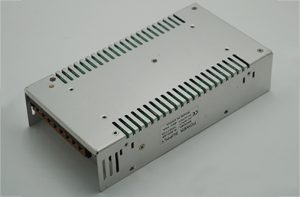
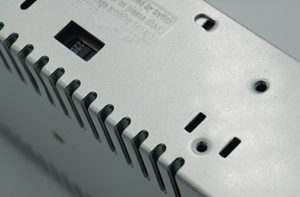
A network communications equipment company needs to customize a batch of chassis and shell parts for a new generation of switches, featuring complex non-standard holes and heat-dissipation structures. The drawings show numerous dimensions and tolerances.
Previous suppliers either offered outrageously high prices or refused – “no molds can make it”.
Our solution

Our engineering team first carried out a surface design optimization of the drawings. They proposed replacing some stainless steel parts with galvanized plates, which would reduce material costs by 15% while maintaining electromagnetic shielding performance.
The accompanying intelligent layout system optimizes material utilization based on order requirements, increasing it to over 90%.
The flexible production system does not rely on traditional molds. Customers only need to provide design drawings, and the technical team can quickly complete disassembly and path programming.
Result
The customer’s unit cost has decreased by 12%, and the assembly efficiency has increased by 20%. This customer has maintained a cooperative relationship for 5 years and has customized over 200 part types.



After sharing these three cases, you might be wondering: How are we able to achieve all this?Click the link below to view our equipment, one-stop manufacturing capabilities, certification qualifications, and quality control procedures:
Start Your Next Project
For the past 27 years, our Sheet Metal Fabrication Services have served over 3,000 enterprises worldwide, relying on on-time deliveries, precise products, and the trust of every customer.
Click the button on the right to contact us immediately and send us the drawings or requirements.
Let’s turn your drawings into high-quality custom parts.