





 +86 18310268158

Metal Stamping Manufacturer: What to Verify Before Awarding
Metal stamping manufacturer searches end in one of two places: a press floor or a trading office. The difference decides your part quality, your unit price and your supply continuity. Our factory in Nanpi, Hebei, has stamped metal parts since 1999. We run 40+ presses from 60T to 400T. Our team is 120 people, including 19 engineers. This guide lists what a real manufacturer shows you. Every item below is one we show buyers ourselves. For the building, the line and the schedule, see our metal fabrication factory.
What “Manufacturer” Should Mean
- Owns the presses: the tonnage range is on a machine list, not a brochure.
- In-house die room: dies are built, maintained and tracked on site.
- Engineering staff: an engineer, not only sales, reviews your drawing.
- QC records: first articles carry measurement data, not photos alone.
- Material control: sheet arrives with a mill certificate, checked at intake.
A metal stamping manufacturer owns the chain from blank to finished part. A trader borrows each step from somewhere else. Borrowed steps have two owners. Your part gets one question: which one fixes the defect? Ownership answers that before the dispute starts. The five lines above are the test. A factory that fails two of them is subcontracting your order, whatever the website says.
Press Line: The First Thing to Check
Press count and tonnage decide what you can stamp. Our line holds 40+ presses from 60T to 400T. The largest single point is a 400T press. Thin clips run on the small presses. Thick chassis parts run on the big ones. Deep drawn cups sit in between, by tonnage math. A factory with one press range can only quote that range.
- Ask for the press list, model by model.
- Ask which press your part will run on.
- Ask the cycle rate the die was designed for.
- Ask how many presses can run a backup die.
Part size, thickness and draw depth set the tonnage. A 2mm steel cup can need 300T. A factory that names the press in the quote has planned your job. A factory that cannot is guessing it. Our stamping capacity guide maps parts to presses, so you can check the math yourself.
Die Room: Where Quality Is Decided
The die is the part’s memory. It holds your dimensions on every hit. A real manufacturer keeps a die room, tracked by job number. It is not a storage room; it is a maintenance schedule with steel attached.
- Dies are stored by customer and job number.
- Maintenance is scheduled from your volume plan, not from failure.
- Wear parts are replaced before dimensions drift.
- First articles after any repair are re-measured.
- The service log follows the die, not the operator.
Ask to see the die that made your reference part. The room, the labels and the service log answer more than any certificate. Our guide on the metal stamping die covers steel grades, life in hits and the maintenance that extends it.
Tryout and First Articles
Tryout is the die’s first test. It happens before production, on your material, to your drawing. A real manufacturer runs it as a process, not a favor. The tryout plan is named in the quote: article count, measured features, your sign-off gate.
- A fixed number of first articles, named in the plan.
- A measurement report against your drawing, datum by datum.
- Your written sign-off before the run starts.
- Changes logged, drawing version frozen.
If a supplier skips tryout, the first production run is the real tryout. Your customers receive it. The record standard we apply is on our quality inspection page. Ask for a sample FAI report from a similar part. If it exists in the factory, it arrives in your inbox the same day.
Reading the Quote Like a Buyer
- Tooling is a separate line, with the die type named.
- Unit price breaks down: material, labor, overhead, margin.
- Tolerance class is written, not assumed.
- Lead time carries a date, not a hope.
- Payment and ownership terms sit in the contract.
Two quotes for the same part can differ by a third. The gap hides in tooling scope and tolerance class, not in labor. A low unit price with hidden tooling costs more at volume. Our post on metal stamping cost splits the unit price into steps. Compare like for like, or the number means nothing.
Material and Records
Since 1999 we have stamped more than 70,000 different types of custom metal parts. Each job keeps its record: material, die, setup, measurements. When a similar part comes back, the record shortens the start. It also pins the baseline for change detection. A metal stamping manufacturer you can trust will hand you a sample FAI report before you decide. That one document replaces ten brochures. One such record sits in our case file. It covers a stamping component for a mechanical framework. The datum held, year after year.
How We Operate
- 40+ presses from 60T to 400T, one roof.
- 6kW laser for blanks; welding and surface treatment in-house.
- 19 engineers review every new drawing.
- Dies tracked by job number, serviced on schedule.
- FAI reports before every run, final QC before packing.
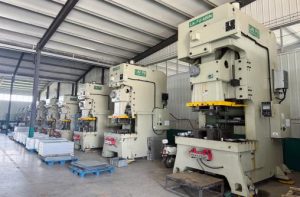
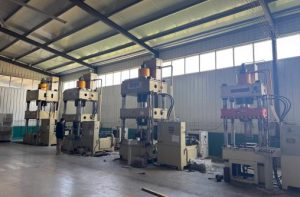
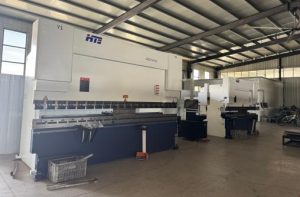
The list above is the check list above, applied to ourselves. A video walkthrough of the line is available on request. That is what a metal stamping manufacturer does: it shows you the floor, the records and the people running it. You award volume to what you have verified, not to what you have been told.
Frequently Asked Questions
What makes a real metal stamping manufacturer?
It owns the presses and the die room. It shows you the machine list, the tryout records and the QC data before you award volume.
How do I verify a stamping factory before ordering?
Ask for the press list, a sample FAI report and a video walkthrough. All three come from the floor, not the brochure. We send all three.
What press tonnage does my part need?
It scales with part size, thickness and draw depth. A 2mm steel cup can need 300T. Send the drawing and we name the press first.
Who owns the stamping die?
You do, when you pay for it. The contract names the owner, the storage and the repair terms. We track every die by job number.
How do you keep quality stable across large runs?
First articles open every run. In-process sampling watches the line. Maintenance is scheduled from your volume plan, not from failure.
Start Your Stamping Project
Send your drawing — an engineer’s review within 8 hours.
WhatsApp: +86 183 1026 8158 | Email: alina@xinjiuxinji.com
Or request a quote online.
Further Verification & Compliance Resources
Before issuing purchase orders for fabricated metal components, verify applicable trade remedy tariffs and origin rules (see our actionable anti-dumping and countervailing duty (AD/CVD) checks).


