+86 18310268158

Stainless Steel Casting Services Explained: Processes, Grades & Design Tips
Stainless steel casting services turn molten alloy into strong, complex parts. This guide explains the process step by step. You will learn which grades fit your project. You will also learn when casting is the right choice. Finally, you will learn how to choose a trusted supplier.
What Is Stainless Steel Casting?
Stainless steel casting is a metal-forming process. Molten stainless steel fills a mold cavity. The metal cools into the final part shape. Almost any geometry is possible. Casting handles shapes machining can’t easily reach. It also suits low- to medium-volume production.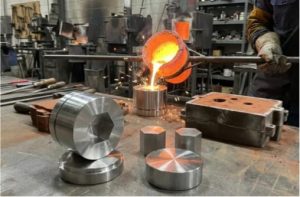
Why choose it:
- Complex internal shapes and undercuts are possible.
- Corrosion resistance protects parts in harsh environments.
- Cast parts keep uniform strength in every direction.
- Tooling costs stay lower than deep-draw dies.
- Material waste is far less than CNC machining.
How Stainless Steel Casting Works
Most stainless steel casting services follow five main steps. Each step controls quality. Finding defects early makes them cheap to fix.
1. Pattern and mold making. The process starts with a pattern. The pattern defines the mold cavity. Investment casting uses a wax pattern.
2. Melting. Stainless steel melts in an electric furnace. Temperature and chemistry are controlled precisely.
3. Pouring. Molten metal flows into the mold. Controlled pouring prevents trapped air.
4. Solidification. The metal cools inside the mold. Risers manage shrinkage during cooling.
5. Finishing. After cooling, remove gates and risers. Parts may be heat-treated, machined, or polished. Blasting and passivation improve surface quality.
Quality checks run through every step. Chemistry is verified before pouring. Dimensions are inspected after cooling. Parts are compared against your drawing.
Common Stainless Steel Casting Processes
Four casting processes dominate the market. Each one fits different parts.
| Process | How It Works | Best For |
|---|---|---|
| Investment casting | Wax pattern inside a ceramic shell | Complex shapes, smooth surfaces |
| Sand casting | Mold made from compacted sand | Large parts, low tooling cost |
| Centrifugal casting | Metal poured into a spinning mold | Cylindrical parts, dense structure |
| Die casting | Metal forced into a steel die | High-volume non-stainless parts |
💡Note: die casting rarely uses stainless steel. Its high melting point quickly wears out dies. Most stainless parts are made by investment or sand casting.
Stainless Steel Grades for Casting
Custom stainless steel casting starts with the right grade. Each grade balances cost and performance.
| Grade | Cast Designation | Key Properties | Common Uses |
|---|---|---|---|
| 304 | CF-8 | Strong corrosion resistance | Food, chemical, architectural parts |
| 316 | CF-3M | Resistants chlorides and salt | Marine, medical, offshore parts |
| 17-4PH | CB7Cu-1 | High strength and hardness | Aerospace, shafts, valves |
| 410 | CA-15 | Hardness and wear resistance | Valve seats, turbine blades |
| 430 | — | Mild corrosion resistance | Trim, appliance parts |
Why Choose Stainless Steel Cast Parts
Stainless steel investment casting produces the finest detail. It is ideal for complex or cored shapes. Cast stainless parts win on four fronts:
- Design freedom. Complex 3D geometry comes straight from the mold.
- Material performance. Stainless steel resists rust, heat, and chemicals.
- Production cost. Casting avoids expensive machining at medium volumes.
- Part consistency. Every part leaves the mold with the same quality.
When Is Stainless Steel Casting the Right Choice?
Casting suits parts that other processes handle poorly. Complex 3D geometry is the clearest signal. Internal cavities and undercuts come straight from the mold. Machining would need many setups to reach the same shape. Tooling cost also matters. Casting tooling costs less than forging dies at low volumes.
Five signs casting fits your part:
- Complex 3D geometry with internal cavities
- Uniform strength in every direction
- Low to medium production volume
- High-strength or corrosion needs (see the grades above)
- Material savings over machining from solid stock
What Affects Casting Cost?
Cost depends on four main factors:
- Part complexity. Complex shapes need more tooling and labor.
- Material grade. 316 and 17-4PH cost more than 304.
- Production volume. Tooling cost spreads over more parts.
- Finishing requirements. Machining and polishing add cost.
Design Tips for Cast Stainless Steel Parts
- Keep wall thickness uniform across the part.
- Add draft angles of one to three degrees.
- Use rounded corners instead of sharp edges.
- Avoid abrupt thickness changes.
- Allow for about 2% shrinkage.
- Keep tolerances realistic for the process.
How to Choose a Casting Partner
Good stainless steel casting services include more than pouring metal. Look for a partner who adds engineering value:
- Engineering review of your drawing before quoting
- ISO 9001-certified quality system
- Clear feedback on design improvements
- Finishing support such as CNC and grinding
- Prototype help for design validation
- Honest lead times and delivery records
Ask for a design review first. A serious supplier finds problems before tooling. Our 19 engineers review every inquiry. We have served metal clients since 1999.
Project Example
Custom cylindrical coupler for a fluid system client. A client needed a hollow cylindrical coupler for a fluid system. The body required a smooth machined bore and tapped screw holes. Our engineers reviewed the drawing first. They confirmed the bore size and screw positions against the print.
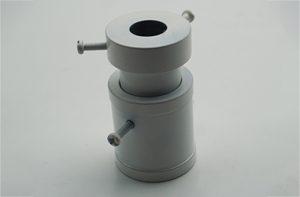
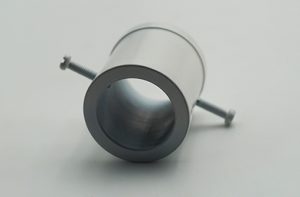
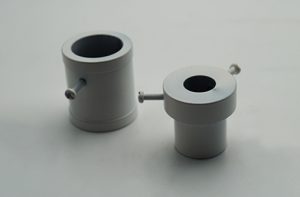
We cast the body, then CNC-machined it to final dimensions. Every part matched the required tolerance. Screws were fitted and checked before packing—the order of 5000 pieces shipped in 15 days.
FAQ
Which casting process suits small complex parts? Investment casting best suits small, complex parts. It delivers smooth surfaces and tight tolerances.
How long does a casting project take? Tooling takes one to three weeks. Production begins after sample approval. Most orders ship in four to six weeks.
Can cast parts be machined after casting? Yes. CNC machining refines critical dimensions. Most projects include some secondary machining.
Do you support low-volume casting? Yes. Sand casting works well for small batches. We also review alternatives that may cost less.
Start Your Project Today
Looking for reliable stainless steel casting services? Send your drawings today. Our engineers reply within 8 hours. Process and material advice is free.