





 +86 18310268158

Stainless Steel 304 Fabrication: A Complete Guide for Custom Metal Parts
What Is Stainless Steel 304?
Stainless steel 304 fabrication turns raw 304 sheets into strong, durable custom parts. This guide explains its properties, processes, and design tips. It helps you plan your next project with confidence.
Stainless steel 304 is the most widely used stainless steel grade. It contains 18% chromium and 8% nickel. Chromium creates a protective oxide layer on the surface.
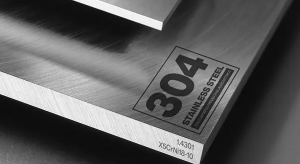
This layer blocks rust and corrosion. The low carbon content also improves weldability. Many industries choose 304 for its balance of cost and performance.
Key composition facts:
- Chromium: 18% – provides corrosion resistance
- Nickel: 8% – adds strength and formability
- Carbon: max 0.08% – supports clean welding
- Manganese, silicon, phosphorus: small amounts
Key Properties of Stainless Steel 304
304 offers a useful mix of properties for fabrication:
- Excellent corrosion resistance in normal environments
- Good strength at both room and low temperatures
- Outstanding formability for deep drawing and stamping
- Easy to weld with standard methods
- Easy to clean, ideal for hygiene-sensitive uses
💡Note: 304 resists most acids and chemicals. It is not fully immune to chloride attack. For marine or salt-heavy settings, grade 316 works better.
Stainless Steel 304 vs Other Grades
| Grade | Best for | Key difference |
|---|---|---|
| 304 | General fabrication, food, chemical | Balanced cost and corrosion resistance |
| 316 | Marine, pharmaceutical | Added molybdenum for chloride resistance |
| 430 | Decorative, mild environments | Ferritic, lower cost, less corrosion resistance |
| 201 | Budget projects | Lower nickel, weaker corrosion resistance |
For most custom metal parts, 304 offers the best value. It delivers reliable quality without the higher cost of 316.
Stainless Steel 304 Fabrication Processes
Stainless steel 304 fabrication covers many processes. Each one suits different part shapes and volumes.
Stamping. 304 is ideal for stamping. It flows well under pressure without cracking. Presses from 80T to 400T handle parts from small brackets to large enclosures. Deep drawing forms cups, housings, and tanks in one piece.
Laser cutting. Fiber lasers cut 304 with high accuracy. A 6kW laser machine handles sheets up to 25mm thick. The cut edges stay clean with minimal burrs.
Bending. Press brakes fold 304 into accurate angles. Springback is factored into tooling design. Our bending team delivers consistent angles across long runs.
Welding. 304 welds cleanly with TIG and MIG methods. Low carbon content reduces weld decay. Proper shielding gas keeps joints strong and corrosion-free.
CNC machining. CNC milling and turning add holes, threads, and fine details. This suits prototypes and low-volume parts.
Surface finishing. Options include brushing, polishing, and powder coating. These improve appearance and protect the surface.
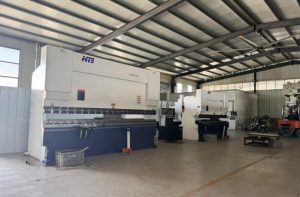
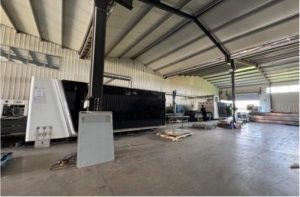
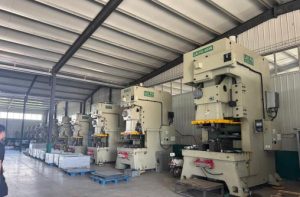
🔧Click here to view the real photos of our 9,000-square-meter factory.→
Design Tips for 304 Fabrication
Good design saves time and money. Follow these tips for smoother production:
- Keep wall thickness uniform to avoid distortion
- Add a bend radius at least equal to the material thickness
- Allow tolerances of ±0.1mm for standard parts
- Avoid sharp internal corners; use radius instead
- Plan hole positions away from bend lines
- Consider grain direction for cosmetic surfaces
304 work-hardens during forming. This is normal. It actually adds strength to deep-drawn parts. Just factor it into your tooling design.
Where Stainless Steel 304 Is Used
304 appears in almost every industry. Common applications include:
- Food processing equipment and kitchenware
- Medical devices and hospital furniture
- Automotive brackets and exhaust parts
- Construction fixtures and handrails
- Electronics enclosures and hardware
- Home and garden tools
- Firefighting and marine equipment
This wide range shows why 304 is the default choice for custom metal parts.
Choosing a Fabrication Partner for 304
Quality starts with the right partner. Look for these markers:
- ISO 9001:2015 certified production
- In-house tooling and engineering support
- Full process control from cutting to finishing
- Rigorous inspection at every stage
- Clear communication on tolerances and timelines
Since 1999, we have fabricated over 70,000 different types of custom metal parts. Our 120+ person team includes 19 engineers. We support projects from prototypes to mass production. This experience helps us solve material and process challenges early.
FAQs
Does 304 rust? 304 resists rust in normal conditions. It can corrode in harsh chloride environments. Use 316 there instead.
Can 304 be welded? Yes. 304 welds easily with TIG or MIG. It stays corrosion-resistant after proper welding.
Is 304 food safe? Yes. 304 is widely used on food contact surfaces. Its non-porous surface resists bacterial growth.
Start Your Project Today
Many questions come up around stainless steel 304 fabrication. The material is strong, corrosion-resistant, and easy to process. Choose a partner with proven experience and full in-house capability.
Have a 304 project? WhatsApp or email us for quotes.


