


 +86 18310268158

Custom Stainless Steel Parts: Common Challenges & Solutions
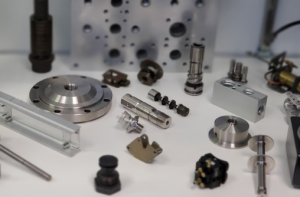 Custom stainless steel parts are widely used in various fields such as medical devices, food processing equipment, chemical equipment, and architectural decoration due to their excellent corrosion resistance, high strength, and long service life.
However, these excellent material properties also bring many challenges to custom processing. This article will introduce common stainless steel grades, typical processing problems, and how we, with over 20 years of industry experience, can provide reliable solutions.
Common Brand Names and Their Characteristics
The characteristics of stainless steel stem from the formation of a dense, chromium-rich oxide film on its surface when the chromium content exceeds 10.5%. In the actual customization of custom stainless steel parts, the following grades are the most common:
| Type | Available Grades | Features | Useful For |
|---|---|---|---|
| Austenitic | 303, 304, 316, 310, 321 | • Mostly includes Chromium and Nickel • Non-magnetic when annealed with a solution • Corrosion-resistant |
• Cookware • Food equipment |
| Ferritic | 409, 430 | • Cost-effective • Low nickel content • Magnetic • Corrosion-resistant |
• Kitchenware • Exhaust • Furnaces |
| Duplex | 318L, LDX2101, LDX2304, 2507, 4501 | • Two-phase microstructure consisting of ferritic & austenitic stainless steel • Better toughness & ductility • Low cost |
• Tubes & Pipes • Heat exchangers • Pressure Vessels |
| Martensitic | 410, 420 | • Moderate to good corrosion resistance • Can be hardened with heat treatment |
• Cutlery • Surgical instruments • Scissors • Industrial blades |
Common Challenges and Our Solutions
The customized processing of stainless steel is far more complex than that of ordinary carbon steel. Its high toughness, low thermal conductivity, and significant tendency towards processing hardening pose numerous technical challenges during processing.
Here are several core challenges we have identified and the corresponding solutions:
Challenge 1: Work hardening and tool wear
During the cutting and stamping processes, stainless steel is highly prone to work hardening. An increase in hardness significantly enhances cutting resistance but also accelerates wear on the cutting tool.
Additionally, stainless steel has poor heat conductivity, and the cutting heat is concentrated near the cutting edge. As a result, the tool is prone to adhesive wear due to high temperatures.
Our approach:
-
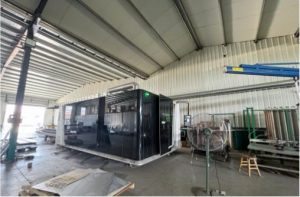
- laser-cutting-machine
-
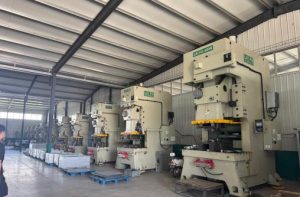
- stamping-machine
– Engineers precisely match the cutting speed, feed rate, and tool material based on the material grade.
– Equipped with a 6-kilowatt laser cutting machine and 40 stamping machines to ensure stable processing of high-hardness materials.
– For complex shapes, optimize the mold gap and lubrication scheme to minimize the impact of work hardening on the quality of the workpiece.
Challenge 2: Bending resilience and dimension control
The elastic modulus of stainless steel is relatively low. After bending, the rebound angle can reach 5 °- 10 °, especially when bending thin plates or at large angles. If the rebound amount is not accurately calculated, it is very likely to cause the workpiece angle to deviate from the standard.
Our approach:
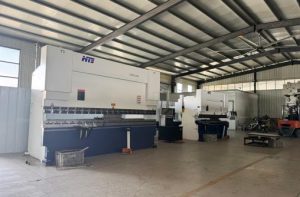
– Before bending, perform rebound simulation compensation, combined with the high-precision rear stop positioning of the bending machine, to stably control the angle error within ±0.5°
– Engineers conduct finite element analysis for high-precision projects in advance, predict the deformation trend of each bending process, and adjust the mold angle
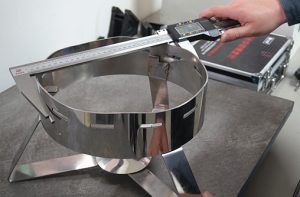
– Equipped with CMM and a complete set of basic measurement tools, the size deviation of each batch can be promptly captured and corrected
-
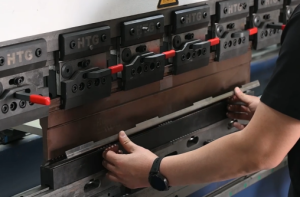
- bending-machine
-
- bending-machine
-
- quality-inspection
Challenge 3: Welding thermal deformation and quality control
The linear expansion coefficient of stainless steel is approximately 50% higher than that of carbon steel. During welding, the thermal stress is concentrated, and thin plates are prone to wavy deformation. In contrast, thick plates may experience angular deformation.
Moreover, stainless steel contains high levels of nickel and chromium, and improper welding techniques may also pose a risk of thermal cracks.
Our approach:
-
- surface-treatment
-
- welding
-
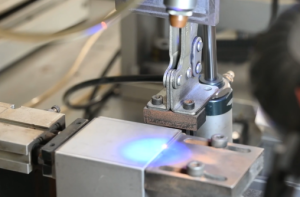
- automatic-spot-welding
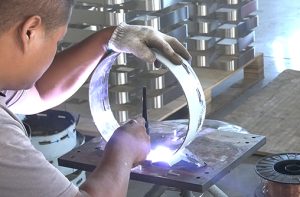
– Utilize automatic spot welding machines and pulsed MIG welding techniques, reducing the heat input by approximately 30%
– Combine with rigid fixture constraints and post-weld shot blasting treatment to eliminate residual stress
– Adjust the welding current, speed, and gas ratio flexibly according to the thickness and grade of the sheet material
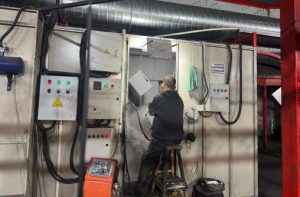
– Implement the entire process from welding completion to surface treatment internally, avoiding quality fluctuations and delivery delays caused by outsourcing processing
Challenge 4: Assurance of surface quality and precision
Stainless steel workpieces often need to maintain a mirror-like finish or specific corrosion resistance properties. However, during processing, scratches from cutting tools, coolant residues, or splashes of welding slag can easily damage the surface oxide film, leading to rust or a decrease in appearance quality.
Additionally, the high ductility of stainless steel makes the cutting edges prone to generating burrs.
Our approach:
-
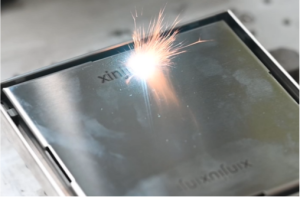
- laser-marking-machine
-
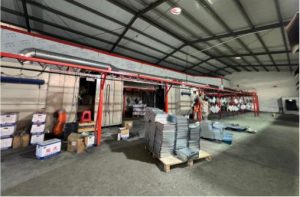
- surface-treatment-line
-
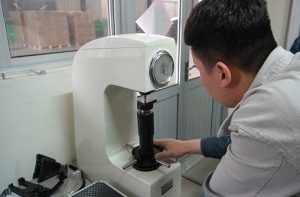
- hardness-tester
– We have our own laser marking machines and surface treatment production lines to provide complete surface treatment services.
– Spectroscopy analyzers are used at the incoming material stage to verify the material composition and ensure that the quality meets the standards.
– Surface roughness meters conduct quantitative inspections on the surface quality of the finished products.
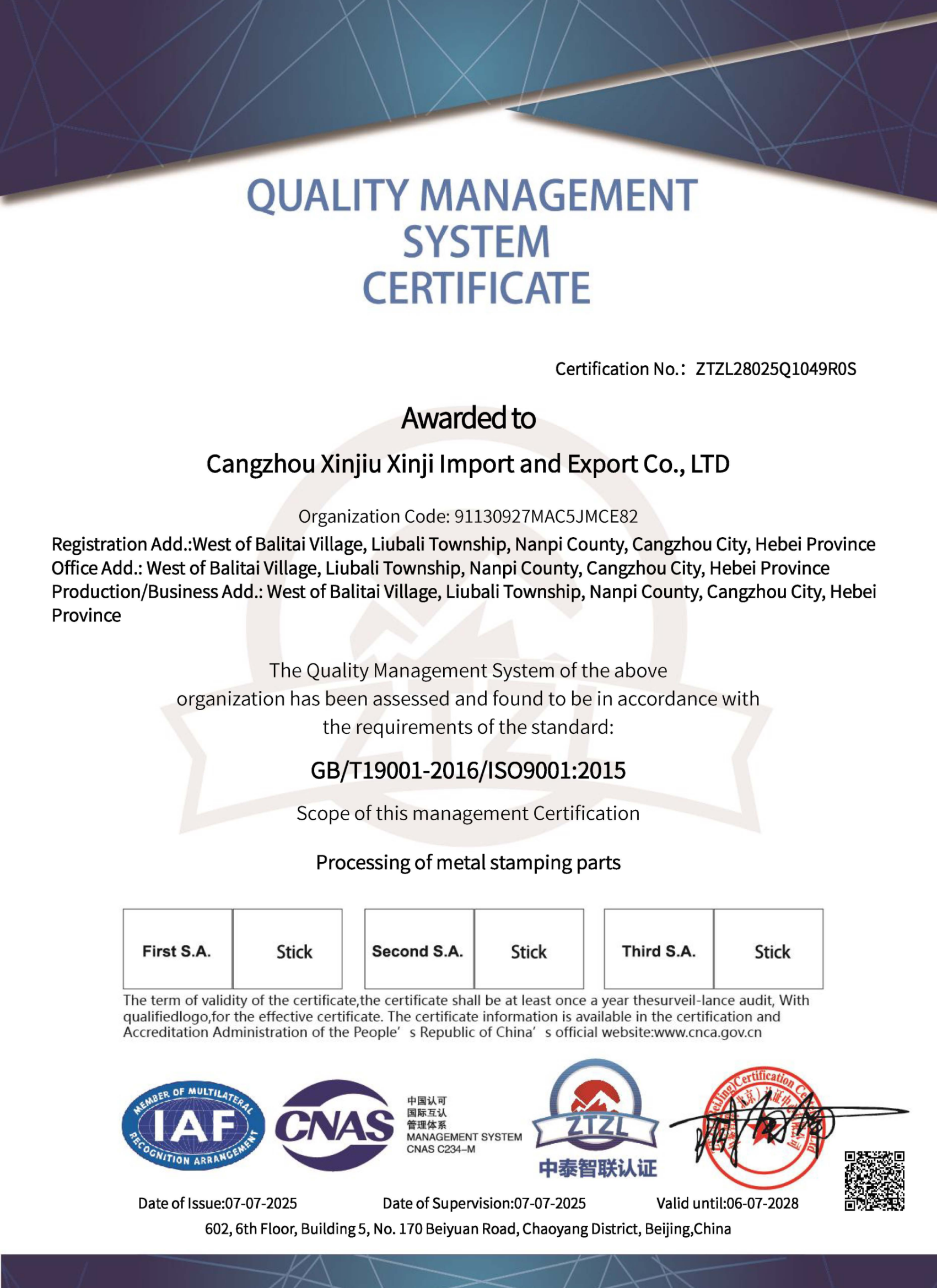
– Through the ISO 9001:2015 quality management system, we control the entire process.
Challenge 5: Batch consistency and delivery schedule assurance
In mass production, factors such as batch variations of materials, tool wear, and parameter drift can all affect product consistency. Moreover, delivery reliability is a key consideration for customers when choosing a customized supplier.
Our approach:
– Modular production to ensure batch consistency
– Monthly output exceeds 500,000 pieces, with mature management experience in large-scale production
– There is a dedicated sample and small-batch production line, with the prototyping stage not occupying the production capacity for mass production
We offer a complete service chain ranging from sheet metal fabrication(cutting, bending, welding, stamping/deep drawing) and metal casting to CNC machining and surface treatment.
Start Your Next Project
Click the button on the right to contact us immediately and obtain your personalized Custom stainless steel parts solution!
All you need to do is provide the drawings, and our engineers will offer free project design optimization and provide free samples for you to verify product performance before full-scale production.
Let’s turn your drawings into high-quality custom parts.