





 +86 18310268158

316 Stainless Steel Custom Parts: Complete Material Guide
316 stainless steel custom parts solve corrosion problems that standard steel grades cannot handle. They survive saltwater, harsh chemicals, and daily sanitizing. This guide explains what grade 316 is and where it excels. It also shows how to order grade 316 custom parts that perform and last.
What Is 316 Stainless Steel?
Grade 316 is an austenitic stainless steel. Its crystal structure stays stable across a wide temperature range. Typical composition includes 16-18% chromium and 10-14% nickel. A 2-3% molybdenum content gives the grade its corrosion resistance.
| Element | 316 (%) | 316L (%) |
|---|---|---|
| Chromium | 16-18 | 16-18 |
| Nickel | 10-14 | 10-14 |
| Molybdenum | 2-3 | 2-3 |
| Carbon | max 0.08 | max 0.03 |
A low-carbon variant, 316L, caps carbon at 0.03%. It resists sensitization near weld seams. Choose 316L for heavy welded assemblies. The alloy is essentially non-magnetic when annealed. Beyond rust, it withstands many industrial chemicals and mild acids.
Standards matter when you buy. ASTM A240 covers 316 sheet and plate. The UNS number for grade 316 is S31600. Quoting these references removes ambiguity. Stock catalog parts rarely match real machine layouts. Custom fabrication delivers the exact geometry, tolerance, and finish your design needs.
Why Choose 316 Stainless Steel Custom Parts?
This grade earns its place when parts must survive moisture, salt, and chemicals.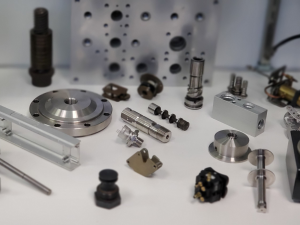
- Superior chloride resistance. Molybdenum protects against pitting and crevice corrosion. This matters wherever chlorides are present.
- Strong yet formable. Minimum tensile strength reaches about 515 MPa. Yield strength starts near 205 MPa. The alloy still bends, draws, and welds cleanly.
- Hygienic and cleanable. Smooth surfaces resist bacterial growth. This trait matters for food and medical applications.
- Wide temperature range. Grade 316 keeps toughness in cryogenic service. It also holds useful strength at elevated temperatures.
- Lower lifetime cost. Corrosion-resistant parts need fewer replacements. The higher material price pays back through longer service life.
Common Grade 316 Part Types
Custom fabricators turn grade 316 into many functional part forms.
- Enclosures and control boxes. Offshore electronics face constant salt spray. 316 sheet metal protects sensitive equipment for decades.
- Brackets and mounting plates. Coastal construction and solar arrays need long outdoor life. This grade resists rain, salt, and UV damage.
- Flanges, fittings, and valve components. Chemical plants handle aggressive media daily. Molybdenum-bearing steel resists acid and chloride attack.
- Deep-drawn housings and containers. Food and pharmaceutical lines need seamless, hygienic shapes. Deep drawing forms 316 without harming corrosion resistance.
- Shafts and marine hardware. Cleats, hinges, and pump parts combine strength with salt-water resistance.
Fabrication Processes for Grade 316 Parts
Each 316 part shape requires a suitable process. A capable custom manufacturer combines several methods.
- Laser cutting delivers clean edges on flat blanks and profiles. Nitrogen-assist gas keeps cut edges oxide-free.
- Stamping and deep drawing produce repeatable enclosures, shells, and housings. Forming forces run higher than with mild steel.
- Bending forms frames, guards, and structural shapes.
- Welding joins assemblies with matching filler rods. TIG and MIG both work on thin and thick sections. Post-weld cleaning restores the protective surface.
- CNC machining adds threads, holes, and tight-tolerance features. Carbide tooling handles the alloy’s toughness.
- Surface finishing covers brushing, bead blasting, and electropolishing. Passivation boosts corrosion resistance after machining.
Grade 316 work-hardens faster than 304 during forming. Proper tool design and lubrication control the result. Each operation leaves its own edge and surface character. The right sequence cuts cost and scrap. One supplier can manage the whole flow.
How to Specify Grade 316 Custom Parts
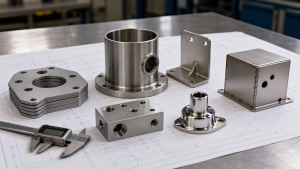
Clear specifications prevent delays and cost surprises. Provide these details with your inquiry.
- Grade and finish. State 316 or 316L on the drawing. Also list the surface finish, such as 2B, brushed, or electropolished.
- Dimensions and tolerances. Provide complete drawings. Full details speed up quoting and tooling.
- Service environment. Describe temperature, chemicals, and salt exposure. This context confirms the right grade choice.
- Quantity and timeline. Prototype first for new designs. Then scale to volume production with confidence.
- Design review. Ask for manufacturability feedback before tooling starts. Good advice flags cost drivers early.
- Inspection and reporting. Define the checks that matter for your part. Dimensional reports can accompany each batch.
Send your drawing, and we will advise on the best way to produce your 316 stainless steel custom parts. The goal is a part that performs well and stays affordable.
Frequently Asked Questions
Is 316 better than 304 stainless steel?
For chloride and salt exposure, yes. Grade 304 suits indoor and mild environments well. Choose 316 when moisture, salt, or chemicals are present.
Can 316 stainless steel be welded?
Yes, grade 316 welds well with standard methods. Matching filler metal keeps joints strong. Post-weld cleaning preserves corrosion resistance.
What surface finish should I pick?
Match the finish to the environment. Brushed parts hide fingerprints well. Hygienic lines often choose smoother finishes. Your application determines the practical choice.
Do you make prototypes before production?
Yes, we recommend a first sample for every new design. The sample verifies dimensions, fit, and finish. This step removes risk before mass production.
How long does a quotation take?
Please send the drawings and complete specifications. We will respond to most quotations within 8 hours. For complex parts, engineering review may take slightly longer.
Do you support overseas orders?
Yes, we export to Europe, North America, and beyond. We arrange packaging and shipping for each order. Global customers receive the same quality standard.
Start Your Project Today
Since 1999, our ISO 9001:2015-certified workshop has served global OEMs. We combine engineering review with in-house fabrication and finishing. Our team has produced more than 70,000 types of custom metal parts. Send your drawings to request a quote for 316 stainless steel custom parts.


