


 +86 18310268158
304 vs 316: Ultimate Guide to Stainless Steel Parts Fabrication Selection
During the fabrication process of stainless steel parts, if the wrong stainless steel grade is selected.
Pitting corrosion, crevice corrosion, and even stress corrosion cracking can all lead to premature failure of the parts. This not only incurs repair and replacement costs but may also trigger customer claims.
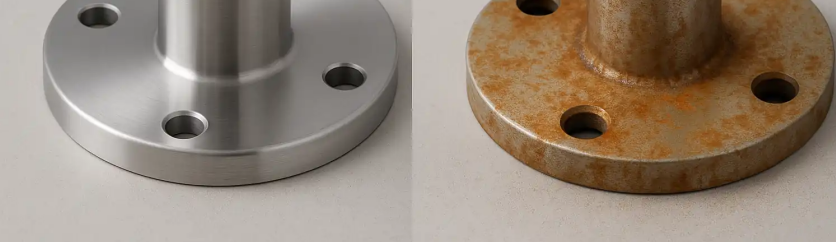
So, which of the two most common stainless steel grades, 304 and 316, can better help you avoid such troubles? This article will thoroughly explain it to you from the perspectives of material properties, application scenarios, and cost comparison.
304 Stainless Steel: Versatile Yet Limited
304 stainless steel (containing 18% chromium and 8% nickel) is the most widely used austenitic stainless steel. Its advantages lie in:
- Comprehensive corrosion resistance: Resistant to most organic acids, alkaline solutions, and atmospheric environments to a sufficient extent.
- Excellent formability: Suitable for processes such as Stamping, Deep drawing, bending, etc.
- High cost performance: Compared to 316, the material cost is significantly lower.
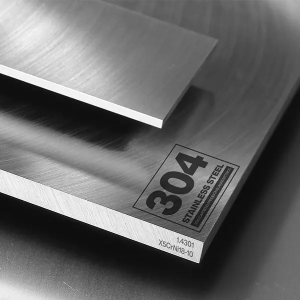
However, 304 is not a panacea. When there is a high concentration of chloride ions in the environment, such as seawater, humid air near the coast, melted snow salt, bleach, and certain industrial brine.
The surface passivation film on 304 is prone to damage, leading to pitting corrosion or crevice corrosion. Once corrosion starts, the part may develop rust spots, perforations, or even fractures within a few months, leading to customer claims.
Application scenario suggestions: indoor dry environments, general industrial structures, food contact (non-high-salt), decorative items, ordinary pipes.
316 Stainless Steel: Enhanced Anti-Corrosion Version
316 stainless steel is made by adding 2-3% Mo to 304. During the fabrication process of stainless steel parts, this advantage is particularly evident:
- PREN value is higher: Generally, the PREN value of 316 is between 24 and 26, while that of 304 is only between 18 and 20.
- It has stronger resistance to crevice corrosion and stress corrosion cracking.
- Its high-temperature performance is slightly better, and it is more stable in long-term high-temperature water environments.
However, the material cost is usually 20% – 40% higher than that of 304, and the requirements for Stamping and Deep drawing processes are slightly higher. But compared to the losses caused by claims, this additional cost is often negligible.
Application scenario suggestions: Coastal outdoor facilities, ship parts, seawater cooling systems, chemical containers, pharmaceutical equipment, and high-salt/high-acid environments in food processing.
304 vs 316: A Table to Help You Choose
| Comparison Dimension | 304 Stainless Steel | 316 Stainless Steel |
|---|---|---|
| Saltwater/Seawater Corrosion Resistance | Poor (prone to pitting) | Excellent |
| Acidic Media Resistance | Fair | Good |
| Alkaline Media Resistance | Excellent | Excellent |
| Typical Material Cost | Baseline | +20%~40% |
| Typical Service Life | 1–3 years (rust may appear) | 10+ years |
| Availability | Very common | Common |
Apart from 304 and 316, the following grades are occasionally used in custom-made parts:
- 430: Magnetic, corrosion resistance is weaker than 304. Low cost. Suitable for dry indoor environments or decorative items.
- 201: Lower cost, good molding performance, but corrosion resistance is far inferior to 304.
- 410: Hardness can be increased through heat treatment. Good wear resistance. But corrosion resistance is average. Suitable for mechanical parts such as valves and cutting tools.
If you are unsure which grade to use for a particular environment, contact our engineering team for an assessment.
Real Case
The Lighting Project along the Southeast Asian Coast – From Potential Claims to Zero-Fault Delivery
Part 1 – Background and Problem Identification
An outdoor lighting company plans to mass-produce stainless steel lamp housings for a coastal landscape project in Southeast Asia. Initially, the client chose 304 stainless steel for cost-control reasons.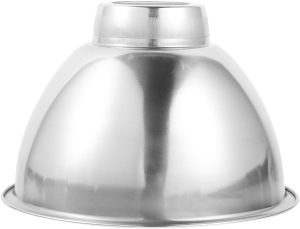
During the DFM stage, after receiving the drawings, our engineers pointed out that in such a high-chlorine environment, 304 would experience extensive pitting corrosion within 6 to 9 months.
To convince the client with facts, we voluntarily provided two sets of samples, namely 304 and 316. We suggested that the client conduct simulation tests at their actual installation site.
After the tests, the client completely abandoned the idea of using 304 and fully switched to 316.
Part 2 – Process Optimization and Service Value
We have re-optimized the Stamping process for the lamp housing, avoiding an additional 15% in mold modification costs due to material upgrades.
Using the in-house surface treatment production line, each lamp housing undergoes acid washing and passivation, eliminating the logistics and management costs of outsourcing processing for customers. The delivery cycle has been shortened by 7 days.
Part 3 – Risk Mitigation and Long-Term Outcomes
By detecting material selection errors in advance, we helped the customer avoid potential losses from scrapping 5,000 304 lamp housings during mass production, eliminating the legal risks of on-site replacements and customer claims in the future.
At present, these lamp housings have been in use for over 3 years. So far, there have been no corrosion complaints.
The customer not only entrusted us with the subsequent 3 phases of projects, but also voluntarily incorporated our material selection suggestions into their internal design specifications.
Summary in one sentence: A correct material recommendation + Complete process Fabrication capabilities can save customers much more than just the material price difference – it can ensure the success of the entire project
Even if the correct material type is selected, improper process control during stainless steel parts fabrication can still lead to corrosion.
That’s why you need a partner who can complete all the steps from material verification, forming, welding, surface treatment, to testing independently. Our engineers can provide free material recommendations and DFM feedback tailored to your usage environment.
Start Your Next Project
With us, you get 25 years of expertise, a 9,000+ m² in-house facility, and an engineering team that truly cares about your project’s success.
“We don’t just read blueprints — we optimize them. From material selection to finishing, free one-stop DFM support.”
— Zhang, Senior Engineer (25+ Years)